Cafe Interior Design - Top Tips
- cassandrachessum
- Jun 29
- 7 min read
Updated: Jul 22

Cafe Interior Design - Top Tips
What makes a café truly unforgettable? It is rarely just the coffee. The spaces we choose to sit in, linger in and return to again and again are the ones that make us “feel” something - welcomed, inspired, at ease. Great commercial interior design doesn’t just look beautiful - it works hard, telling a story, building a brand and keeping customers coming back through the door.
At CCID, we recently had the wonderful privilege of designing the interior for Amalfi Bar & Café - a stunning new venue in Devon that celebrates the spirit of the Italian Amalfi Coast in the heart of the British high street. From the curved banquette seating and statement rattan pendants to the bespoke wall mural and the bold lemon-themed ceramics, every detail was considered with purpose and passion.
Drawing on this project and our broader experience in commercial interior design, please find below CCID’s Top 5 Interior Design Tips for designing a commercial cafe that customers will fall in love with.
1) Story - Create a convincing story, which acts as your creative compass:
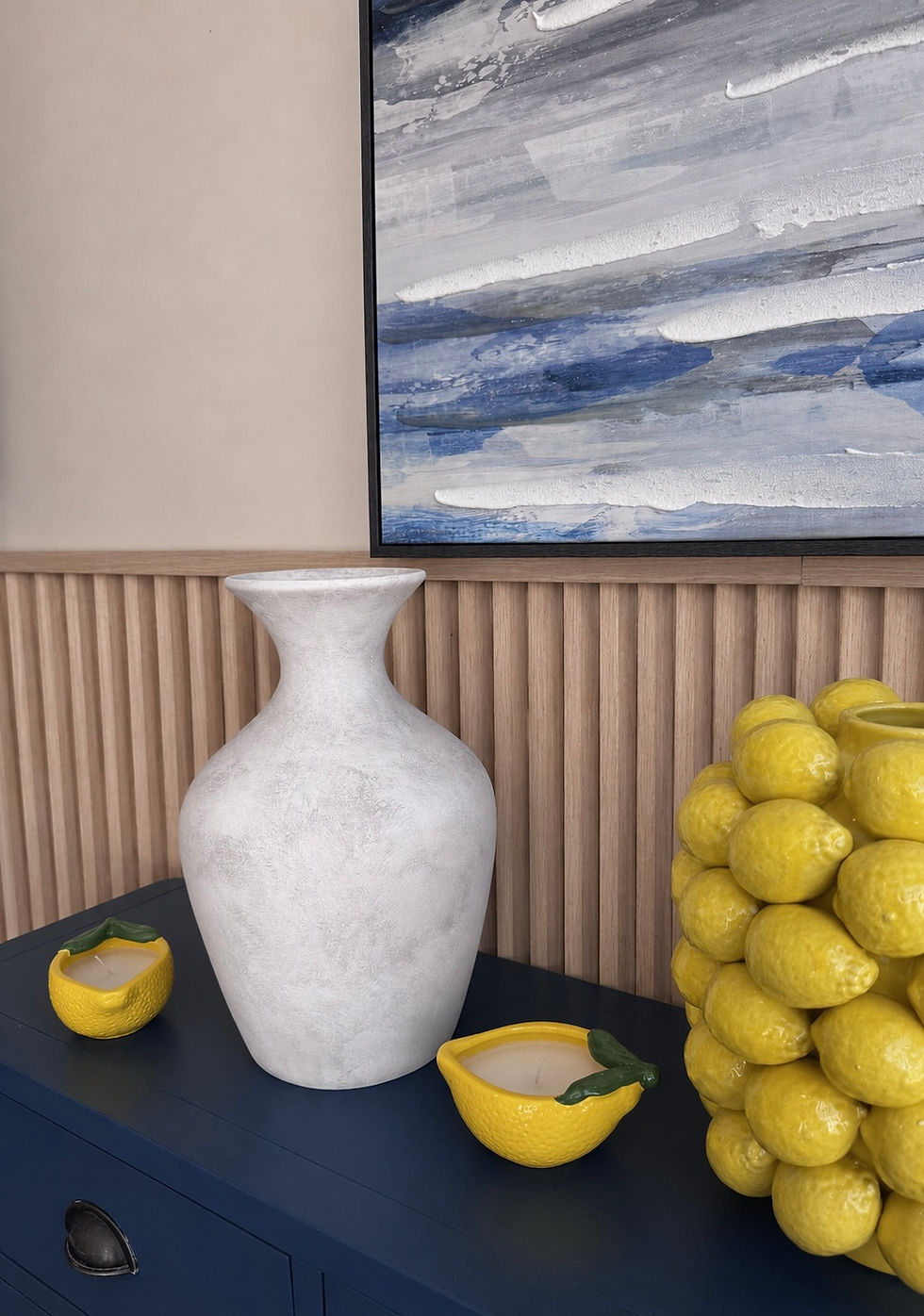
Every great café interior starts with a narrative. What do you want people to feel the moment they walk through the door? At Amalfi Bar & Café, the brief was to transport guests to the sun-drenched coastline of southern Italy - lemons, blue sky, sea breezes, whitewashed terraces and so on. This became the creative compass for every single decision we made. The abstract seascape canvas above the navy blue sideboard. The Sicilian-style lemon ceramic vases. The lemon tree beside the window. The bespoke hand-painted staircase wall mural, with lemon vines and a vivid blue Mediterranean sky. Each element is a brushstroke in a larger story.
Top Tips:
- Define your concept before you select a single piece of furniture or choose a paint colour.
- Create a concept board that captures the “feeling” you want to create, not just the “look”.
- Ensure your story is consistent from the entrance right through to the rest rooms (yes, the toilets!).
- Use signature pieces - a wall mural, a statement light fitting, a collection of objects - to anchor the narrative and give guests something to notice, photograph and remember.
- Don’t be afraid of personality. Spaces that feel genuinely considered and even a little unexpected are the ones people want to share.
A powerful design story doesn’t just create atmosphere - it builds brand identity and loyalty. When a space feels coherent and authentic, guests trust it and they return.
2) Zoning - Plan your space effectively:
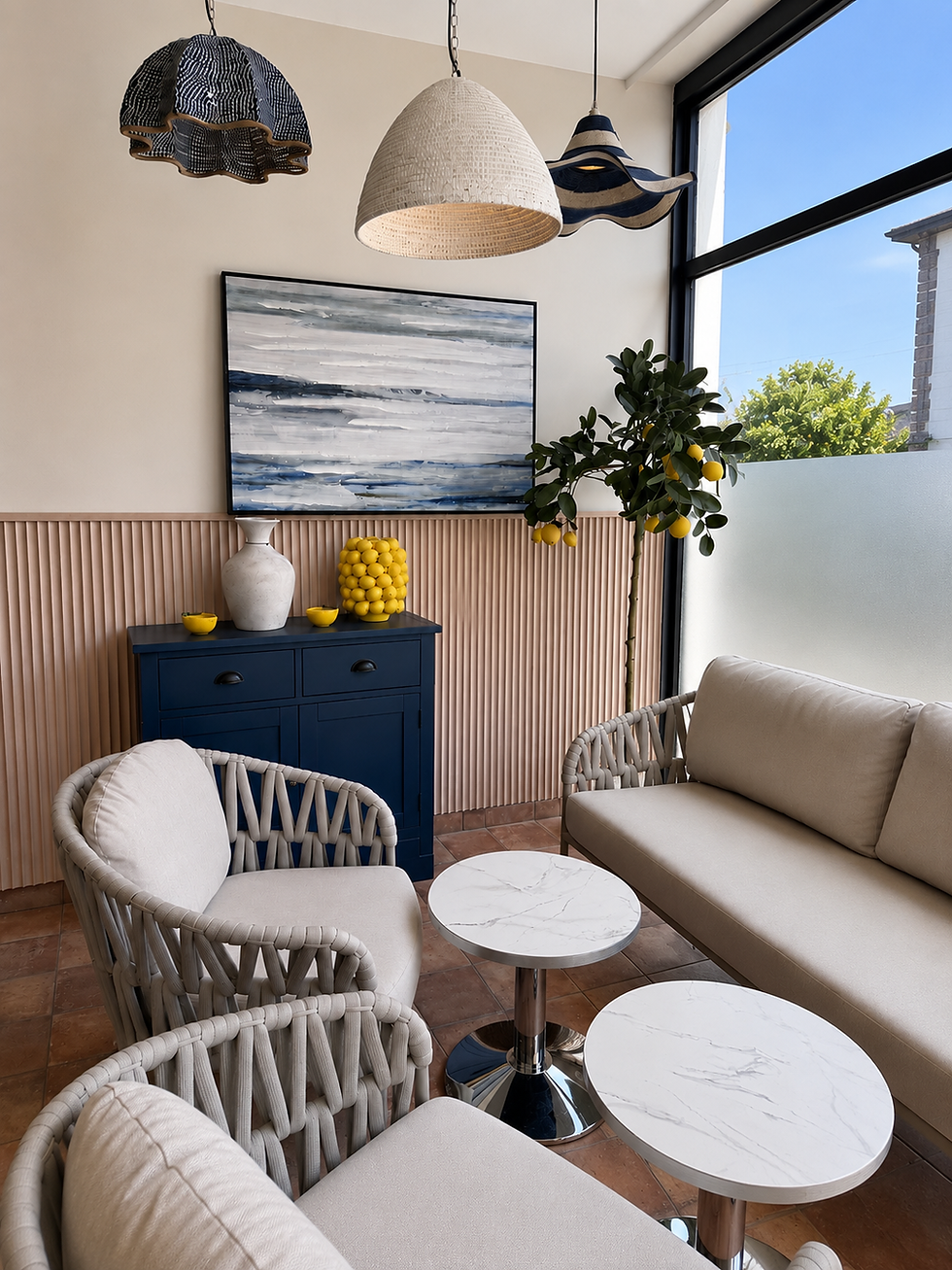
Beautiful design is nothing without great spatial planning. In a commercial café, every square foot needs to be functional, flow naturally and cater to a range of customer needs - from the solo laptop worker to the group celebrating a birthday. At Amalfi Bar & Café, we created distinct zones that each offer a slightly different experience. The lounge area by the front window - furnished with rope armchairs and a plump sofa, as well as marble-topped coffee and side tables - offers a relaxed, almost living room feel, perfect for leisurely morning coffee or afternoon tea. The curved banquette seating, paired with round marble dining tables and upholstered chairs, is ideal for more structured dining.
Top Tips:
- Map out how customers will move through the space before finalising the layout, as well as sourcing and procuring furniture.
- Consider sight lines - guests like to feel they have a sense of place and privacy, whilst staff need clear lines of vision to deliver excellent customer service.
- Position your most Instagram-worthy design moments (such as a wall mural or a statement light) where they are naturally visible. This is your best free marketing.
- Create a mix of seating types, such as booth seating, dining chairs and lounge furniture, to attract a wide variety of customers, as well as providing different dining options.
- Allow breathing room. Overcrowding a space in pursuit of more covers is one of the most common commercial design mistakes. It undermines the atmosphere you have worked so hard to create.
Good zoning means that a café feels effortlessly comfortable rather than chaotic - and that is what keeps the tables full.
3) Layering - Layer colour, texture and light to create depth:
The difference between a café that looks polished and one that feels truly special is almost always the quality and depth of the layering. This is the art of combining materials, finishes, colour and light in a way that adds warmth, richness and visual interest at every level. At Amalfi Bar & Café, we layered throughout: natural oak fluted wall panelling alongside warm stone painted walls combined with deep navy blue joinery. Warm terracotta floor tiles grounded the space, while the blue and white patterned Italian tiles help to zone the bar area. The fluted back banquette seating in a dusty blue fabric sat against a rich tan leather seat base, combined with tactile rope-woven and boucle wool furniture adds organic texture. Taken together, all of of this acts a considered combination of comfort and sophistication. Overhead, the range of rattan and sea grass pendant lights - all at different heights add layers of visual interest at ceiling height.
Top Tips:
- Think in three levels: floor level (such as flooring and skirting), mid level (such as walls, furniture and joinery) and ceiling level (such as lighting, ceiling treatments and hanging elements). Layering at all three levels creates a sense of richness and completeness.
- Mix hard and soft materials, such as stone, ceramic and timber alongside linen, rope and boucle - to create tactile interest.
- Use a considered colour palette of two or three core colours, with accent tones introduced through accessories, artwork, ceramics and plants.
- Don’t overlook the walls as a design surface. Fluted panelling, tiles, mirrors and art can transform an ordinary wall into a design statement.
- Introduce natural elements, such as indoor plants, reclaimed wood and natural stone, to bring warmth, texture and an organic quality that feels inviting rather than sterile.
Layering takes time and a discerning eye, but it is what elevates a space from pleasant to genuinely beautiful.
4) Lighting - Use lighting as your most powerful design tool:
If there is one area of commercial interior design that is consistently underestimated, it is lighting. Lighting does not merely illuminate a space - it transforms it. It sets the mood, defines the zones and showcases the design. At Amalfi Bar & Café, we used lighting to create warmth and ambiance throughout the day and into the evening. The ribbed ceramic wall lights cast a soft, flattering upward and downward glow along the dining wall. The rattan and sea grass pendant lights in the lounge area add warmth and a relaxed, artisanal quality. In the rest rooms, polished nickel wall lights with a ribbed glass shade are flanked by a round mirror, creating a boutique hotel-quality finish that guests notice and appreciate.
Top Tips:
- Layer your lighting into three types: ambient lighting (for general illumination), task lighting (for functional purposes, such as over counters and menus) and accent lighting (to highlight art, architectural features and display areas).
- Avoid relying on a single source of overhead lighting. It is unflattering, flat and misses the opportunity to create atmosphere.
- Choose warm-toned bulbs (2700K–3000K) for a welcoming, inviting quality - especially important in the evening.
- Invest in dimmer controls, so that the same space can feel bright and energising at lunchtime, as well as intimate and atmospheric at nighttime.
- Consider your exterior lighting too - a beautifully illuminated shop front is enormously powerful in drawing customers in, particularly on darker evenings.
Great lighting ultimately transforms the space, setting the mood, defining the zones and showcasing the design.
5) Detail - Obsess over the details:
In commercial interior design, the details are not a finishing touch. They are the finish. The pieces that people remember - the ones they photograph and mention to friends. They are almost always the unexpected, considered details that demonstrate genuine passion and craft. At Amalfi Bar & Café, the details tell the full story. The trio of beachfront basket striped shades mounted on the staircase ceiling act as a stunning lighting fixture, well as an art installation. The lemon-cluster vase on the sideboard alongside a chalky white vase. The beautiful blue and white patterned Roman floor and wall tiles in the rest rooms, paired with a deep navy vanity unit and round mirror. The bespoke Amalfi themed wall mural that wraps around the staircase, hand-painted from floor to ceiling, that greets guests as they move through the venue. None of these details were afterthoughts. Each one was selected because it belongs - because it deepens the story and adds beauty.
Top Tips:
- Allocate a proper budget for accessories, artwork and decorative objects. These are the elements that make a space feel curated rather than catalogue-bought.
- Source pieces with provenance. Handmade ceramics, original artwork, antiques and collectables add authenticity that mass-produced items simply cannot replicate.
- Consider every touch point - from menus to tableware and the front door to the bathroom. Consistency in the details signals quality and care.
- Use art boldly. A carefully sourced piece of artwork - whether a large-scale painting, a photographic print or a sculptural object - can anchor an entire space and become the most talked about element in the room.
- Think about scent, sound and touch, as well as sight. A beautifully designed café engages all the senses - from the fragrance of fresh flowers or lemon-scented candles to the quality of the tactile surfaces guests touch throughout their visit.
Customers may not be able to articulate exactly why they love a space, but they will always feel the care that went into the details. And this feeling is what brings them back.
Summary
Great commercial design is an investment, not a cost. At CCID, we firmly believe that great interior design is one of the most powerful investments a commercial business can make. A beautifully designed café does not just attract customers - it commands better price points, generates organic social media exposure, builds a loyal community and communicates brand values without saying a word.
Whether you are opening a new venue, refreshing an existing one or simply looking for inspiration, we would love to help you create a space that truly reflects your vision and works brilliantly for your business. To discuss your commercial project, please get in touch at hello@c-c-i-d.com or visit www.c-c-i-d.com.
Happy Designing
Cassandra x
-----
Cassandra Chessum Interior Design (CCID) is a full-service interior design practice with studios in Devon and London. We specialise in residential and commercial interior design, from concept development and spatial planning to project management and styling. Visit www.c-c-i-d.com to find out more.






Comments